

In brief: Wellness spaces carry high expectations and often silent disappointments. A hotel spa audit assesses far more than the cleanliness of the facilities: it maps the experience lived from check-in at the spa through to the end of the treatment, and reveals the gaps between the promise and the reality. For a high-end hotel, neglecting these spaces in quality assessment means accepting that satisfaction can slip away in the final stretch of the stay.
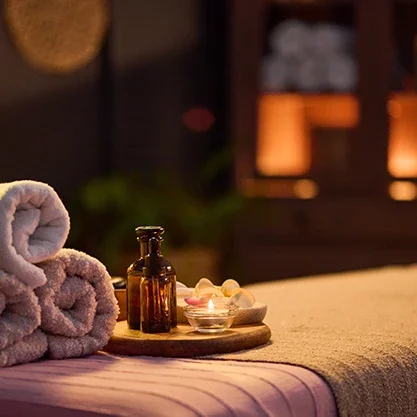
There is a paradox that few hotel management teams dare to name: the ancillary spaces – spa, pool, fitness, rooftop, hammam – are often the very first selling points highlighted in a property’s marketing. Full-page photos on the website, top-of-list mentions on the OTAs, promises of regeneration and letting go. And yet, these are precisely the spaces that most often slip through the net of quality audits.
Why? Because they are seen as “extra” to the hotel’s core business. A major strategic mistake.
For a 4- and 5-star clientele, the spa is not a bonus. It is often the main reason for the stay. According to a Coach Omnium study of 621 French and European hotel guests (2022), more than two-thirds of luxury hotel guests consider the presence of a spa essential or important. And for more than 4 out of 10 guests, the spa directly influences the choice of property.
Assessing these spaces with the same rigour as the rooms or the restaurant is not optional. It is a necessity.
Why ancillary spaces are the blind spots of hotel audits
The first reason is organisational. In many properties, the spa is managed by a separate team – sometimes outsourced, sometimes run by an external provider applying its own standards. The fitness area may report to a different manager. The pool to a third. The result: each space operates in a silo, with no consistency of service with the rest of the hotel.
The second reason relates to guest memory. The transition between the hotel and the spa is a frequent breaking point: reception is excellent, the spa disappointing. And it’s that last memory that stays. Not the welcome. Not the room. The moment something went wrong.
The third reason is linked to the data available. Online reviews of the spa are rare and poorly structured. “The spa was nice” says nothing about the real quality of the care provided. Management naturally focuses audits on the rooms and the restaurant – where guest feedback is most abundant and most detailed. The ancillary spaces remain in the blind spot.
The conclusion follows on its own: a 5-star hotel with a 3-star spa does not deliver a 5-star experience. No matter how good the rest is.

What is assessed in a hotel spa audit
A serious hotel spa audit is not just about ticking hygiene boxes. It follows the guest journey in full, from booking the treatment to the moment the guest leaves the space. Here are the four levels of assessment.
Welcome and guest handling
Everything starts before even entering the spa.
-
- Booking the treatment: is it smooth? Is there a quick response? Is personalised guidance offered based on the guest’s needs, or is it simply a list of available treatments?
-
- The welcome on arrival: the tone, the presentation of the spaces, the handing over of equipment. Is it warm or perfunctory?
-
- The pre-treatment consultation: does the therapist ask about preferences, contraindications, expectations for that moment? This is where personalisation happens – or doesn’t.
Spaces and facilities
Cleanliness and upkeep are non-negotiable: changing rooms, showers, pools, treatment rooms. A poorly maintained damp floor, a towel that’s too thin, a locker that sticks – these tiny details destroy the ambience in seconds.
Beyond cleanliness, the sensory quality of the space is assessed: water at the right temperature, lighting suited to relaxation, controlled noise levels. A noisy spa is no longer a spa.
The consistency between the promise and the reality is also assessed: do the website photos match what the guest discovers on arrival? The gap in perception is itself an evaluation criterion.
The treatment itself
Three dimensions are central to assessing wellness in a hotel setting:
-
- Adherence to the protocol and timing: does the treatment actually last the announced time? Are the steps followed?
-
- The quality of the therapist-client relationship: listening, adapting during the treatment, discretion. A therapist who talks too much or doesn’t adjust the pressure after verbal feedback – that’s a failed treatment.
-
- The before/after transition: is the guest guided to the relaxation area? Given water? Left in preserved silence, or sent back to the changing rooms with no transition?
Departure and follow-up
The post-treatment moment is often the most neglected. Yet this is where the final impression is either consolidated – or falls apart.
-
- The relaxation area: herbal tea, silence, soft lighting. Does it even exist?
-
- The sales approach: is it genuine advice on suitable products, or a hard sell that breaks the state of relaxation?
-
- Billing and departure: smoothness, warmth, an invitation to return. Hotel spa quality is also measured in these final minutes.
Pool, fitness, rooftop: spaces in their own right
Spa assessment doesn’t stop at the treatment rooms. The freely accessible spaces deserve just as much rigorous attention.
The pool is the most-used facility: more than 9 out of 10 guests use it when it exists, according to the Coach Omnium study. What is assessed there goes well beyond water quality. Towel availability, poolside service, management of crowding at peak times, sound ambience, consistency with the hotel’s positioning. A quiet pool in a palace hotel is a standard. A noisy pool in a family resort hotel may well be intentional. The audit puts things in context.
The fitness area suffers from a well-earned bad reputation in many properties: tucked away in the basement, poorly lit, ageing equipment. The Coach Omnium study confirms this – half of hotel guests admit they never go there. What is assessed: the actual condition of the equipment, cleanliness, the availability of guidance (a displayed programme, an available coach), and the overall atmosphere. A well-designed fitness space can become a point of differentiation. Poorly maintained, it becomes a point against.
The rooftop and outdoor spaces raise a question of consistency: is the experience offered at the same level as the rest of the hotel? Service quality, management of nuisances (wind, noise, direct sunlight), order fulfilment speed – all of this is assessed.
What all these spaces have in common: the absence of service is itself an evaluation criterion. A freely accessible space with no human presence, no signage, no towels available – that is not neutral. It is a shortfall.
The impact of ancillary spaces on overall stay satisfaction
A stay can be excellent on every point and still leave a mixed impression because of a single disappointment at the spa. This isn’t a hunch – it’s a documented psychological mechanism.
The peak-end rule, put forward by psychologist Daniel Kahneman, holds that we remember an experience through two moments: the most intense one and the last one. If the spa is the last space visited before departure, its level of quality weighs disproportionately on the memory of the stay. A disappointing treatment at 11am on check-out morning erases three days of excellence.
There is also an emotional dimension specific to these spaces. A guest booking a massage or settling into a hammam is not simply consuming a service. They are seeking to recharge, to let go, to experience something. The expectations are emotional, not just functional. The gap between expectation and reality is therefore more painful than in other areas of the hotel.
And the disappointment stays silent. A frustrated guest doesn’t always write it in a review. But they don’t come back.
How to integrate ancillary spaces into an overall audit approach
A hotel wellness audit should not be a separate audit. It should be built into an overall assessment of the guest journey, from booking to check-out. Consistency between the hotel and its ancillary spaces is itself a criterion: the same level of service, the same tone, the same culture of hospitality. A spa that speaks a different language from the hotel creates a break in the experience – even if each space, taken on its own, is of good quality.
The spa mystery visit is the most suitable tool for assessing these spaces under real conditions. The auditor books a treatment, experiences the full journey, and observes without the teams knowing they are being assessed. It is the only method that measures what really happens – not what teams do when they know they’re being watched.
Girault-Pasqué has been carrying out this type of assignment since 2011, across more than 250 properties in 30 countries. Assessing wellness spaces is an integral part of the audits carried out in luxury hospitality, using assessment grids tailored to the standards of palace hotels, resort hotels and thalassotherapy centres.
Recommended frequency: at least one assignment per season for properties with strong wellness activity. Standards degrade quickly when they aren’t measured regularly – and the teams know it.
Frequently asked questions
A hotel spa audit is a structured assessment of all of a property’s wellness spaces – spa, pool, fitness area, hammam, rooftop – from the guest’s point of view. It analyses each stage of the journey: booking, welcome, quality of the facilities, how the treatment unfolds, the post-treatment moment and departure. The aim is to identify the gaps between the property’s promise and what the guest actually experiences.
The criteria cover four levels: welcome and guest handling (booking, pre-treatment consultation), spaces and facilities (cleanliness, sensory ambience, consistency with marketing), the treatment itself (protocol, therapist-client relationship, timing), and departure (relaxation area, product advice, billing). Professional frameworks such as the Spa-A Quality Charter (more than 100 criteria) or the ISO 17679 standard provide reference frameworks for structuring these assessments.
Not necessarily separately – but with specific attention. The spa carries particularly strong emotional expectations, is often managed by distinct teams, and is frequently the last space visited before departure. These three factors make it a major risk point for overall satisfaction. An assessment that gives it no dedicated criteria misses what matters most.
The auditor presents as an ordinary guest. They book a treatment through the usual channels, experience the entire journey – welcome, changing rooms, consultation, treatment, relaxation area, departure – and assess each stage against a predefined grid. Neither the therapists nor management know an assessment is under way. This is what guarantees the reliability of the observations. The report then sets out the strengths, the friction points and the operational recommendations.
For a property with active wellness offerings (resort, thalassotherapy centre, palace hotel), one assignment per season is recommended – roughly four times a year. For an urban hotel with a spa, two assignments a year are a minimum. Frequency should also take staff turnover into account: a change of therapists or spa management justifies a prompt assessment, regardless of the usual schedule.
Useful sources
- Coach Omnium, La clientèle hôtelière et les spas (Volume 10, study of 621 guests, June 2022): coachomnium.com
- Spa-A, Charte Qualité Spa – more than 100 assessment criteria: spa-a.org
- ISO 17679:2016, Services – Wellness spas – Service requirements: iso.org
- AFNOR, NF X50-843 – The first French standard dedicated to wellness spas: normalisation.afnor.org
- EuropeSpa, Standards & Certificates – the ESPA’s official quality system: europespa.eu