

In summary
A mystery visit in a restaurant evaluates the entire guest journey — from reservation to departure — through hundreds of objective, structured criteria.
It is a tool that neither online reviews nor satisfaction surveys can replace: it provides a neutral, reproducible perspective that management can directly act upon to drive improvement.
Introduction
You receive Google reviews, you send satisfaction surveys, you read TripAdvisor comments. And yet, something escapes you.
Online reviews have well-known limitations. They are often polarised — either highly enthusiastic or very negative — and rarely representative of the ordinary experience. The negativity bias drives dissatisfied customers to leave reviews more frequently, while satisfied customers remain silent. And satisfaction surveys, however well designed, only capture what the customer chose to remember and express.
The mystery visit brings something else: a structured, neutral and operational perspective, grounded in the reality of service as it is experienced day to day. It is not an inspection. It is a revealer.
Before even arriving: the reservation and first contact
The guest experience begins well before entering the dining room. It begins the moment the guest picks up the phone — or opens your website to book.
What the auditor evaluates at this stage:
- Response time (is the phone answered quickly? is the online form responsive?)
- Quality of the exchange: friendliness, clarity of information provided, reservation confirmation
- Ability to handle specific requests (allergy, birthday, accessibility)
- Consistency between the information given and the reality experienced upon arrival
This first contact already reveals a great deal about the establishment’s internal organisation. A restaurant that doesn’t answer the phone, confirms without personalising, or provides incorrect information sends a signal before the guest has even walked through the door.
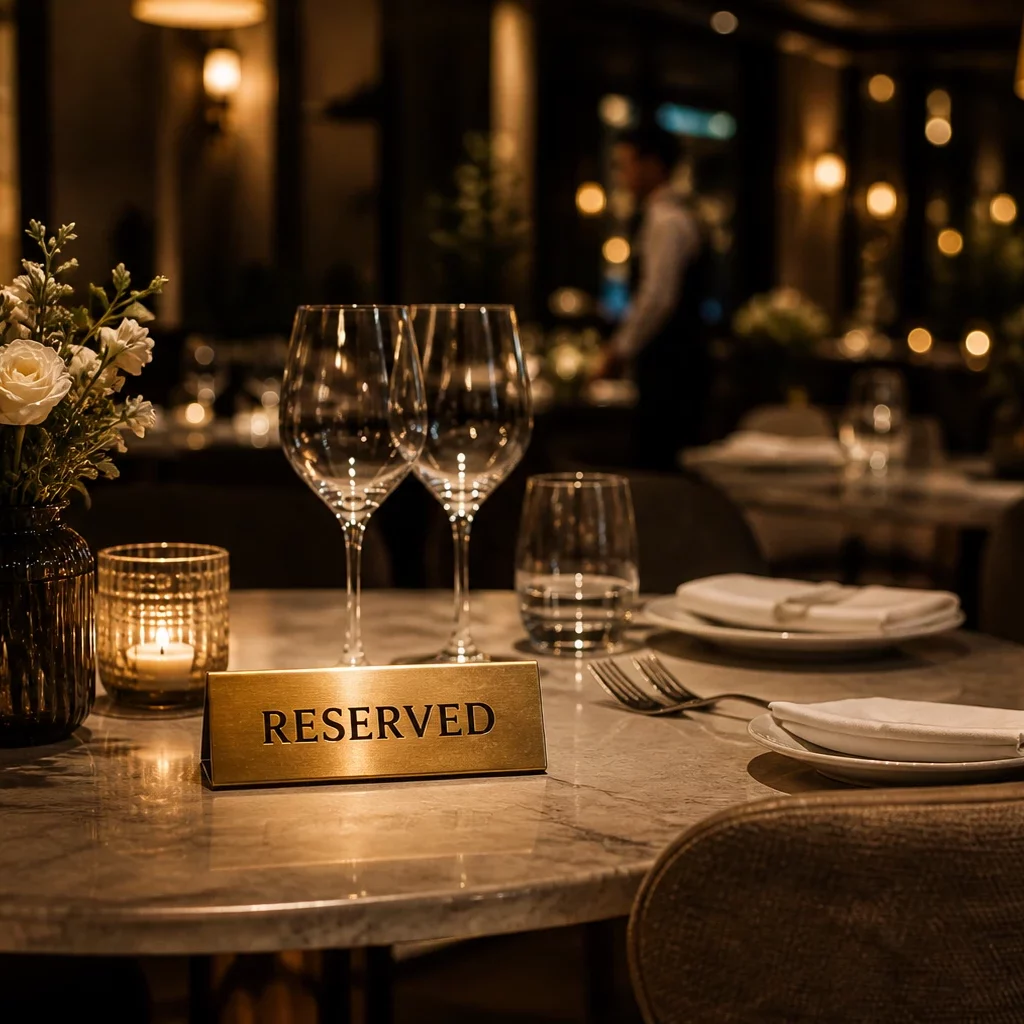

The welcome: the moment that sets the tone for everything else
We know it intuitively, yet it is still too often underestimated: the first seconds in a restaurant shape the perception of the entire meal.
The auditor observes with precision:
- The welcome delay: how much time passes before a team member acknowledges the guest?
- The quality of the first impression: smile, eye contact, greeting
- Table placement: does the table offered match the request? Is the guest guided or left to find their own way?
- The general attitude of the team upon arrival: availability, energy, consistency among members
What restaurateurs often underestimate: the welcome is not solely the responsibility of the host or maître d’hôtel. It is the responsibility of the entire floor team. A server who catches the eye of an entering guest and says nothing — even if they are not in charge of welcoming — leaves an impression.
Floor service: far more than taking an order
This is the heart of the evaluation, and without doubt the richest source of insight.
Knowledge of the menu and products
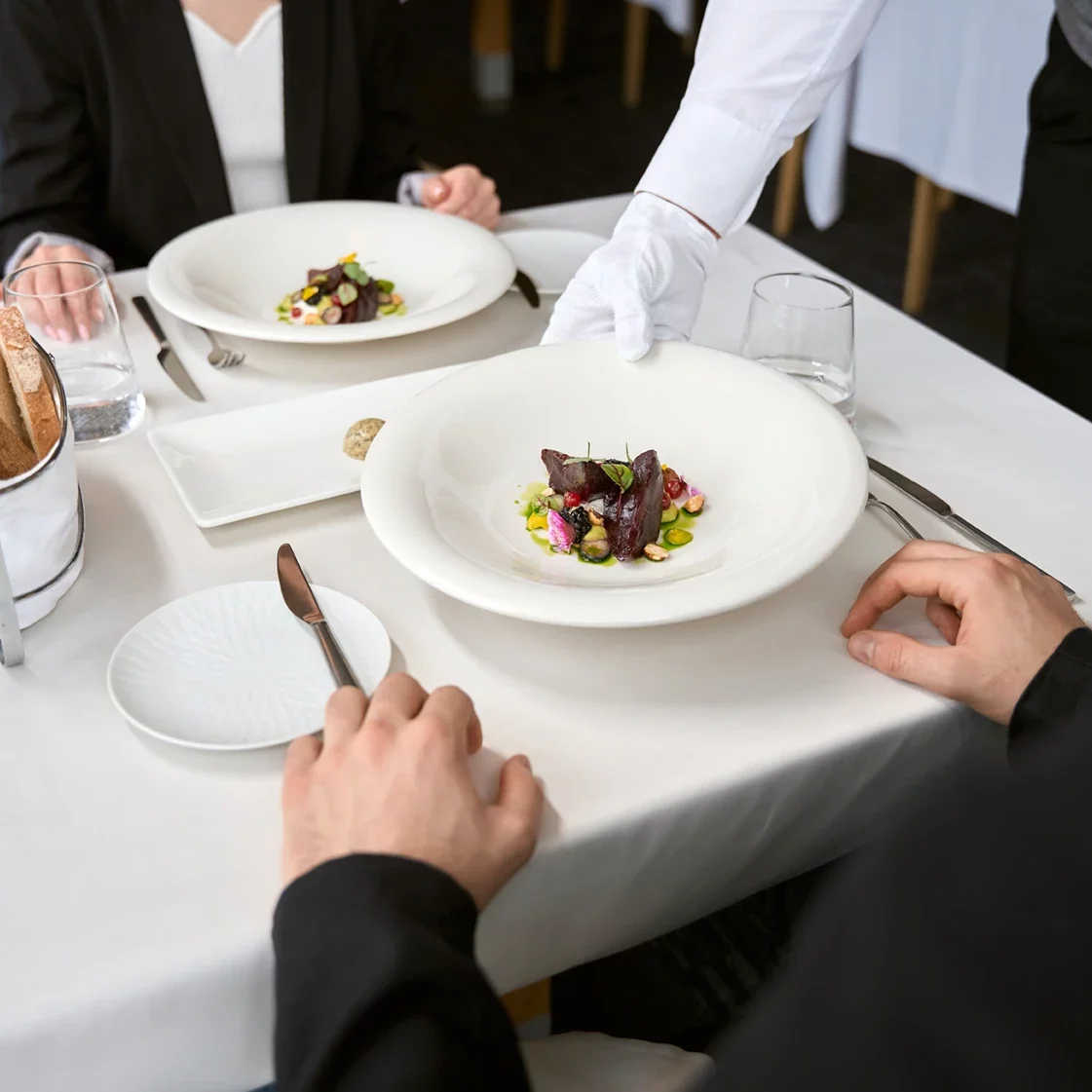
The auditor tests the server’s ability to present dishes, make suggestions, and answer questions about allergens, origins and preparation methods. A server who doesn’t know what a dish contains, or who has to “check with the kitchen” for every question, reveals a training deficit.
Service timing
Pace is a fundamental criterion — and one that is often overlooked. The auditor measures:
- The time between taking the order and bringing the first courses
- The waiting time between courses (too short? too long?)
- The team’s ability to adapt the pace to the guest’s profile (business lunch vs family meal)
Servers’ attitude and posture
Availability without intrusiveness, discretion without absence, proactivity without rushing: floor service is an art of balance. The auditor assesses physical posture, tone, and the ability to anticipate needs.
Handling of unexpected situations
This is often where the true quality of an establishment is revealed. How does the team react to an order error? A missing dish? A dissatisfied guest? The way a problem is handled can transform a negative experience into a positive memory — or the reverse.
| What the auditor evaluates | What an ordinary guest notices |
|---|---|
| Precise timing between each stage of service | “The service was slow” |
| Server’s knowledge of allergens | “The server was friendly” |
| Team posture and body language | General impression of atmosphere |
| Complaint handling according to protocol | “They handled my issue well” |
| Consistency of service across all team members | Unstructured overall perception |
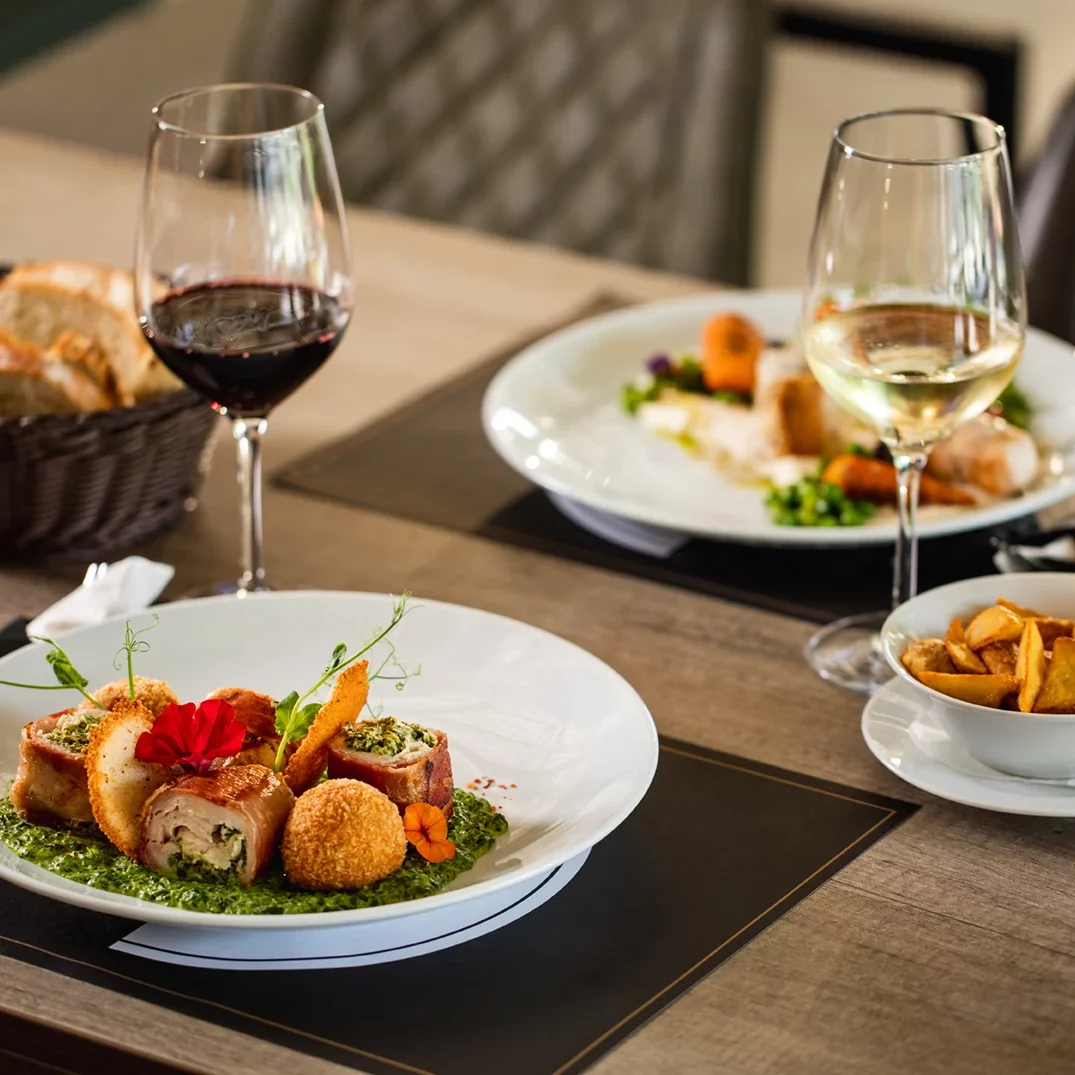
What’s on the plate: what is evaluated (and what is not)
An essential point to clarify: a mystery visit is not a food guide.
The auditor does not rate “taste” subjectively. They make no claim to being a culinary critic. What is evaluated consists of objective, reproducible criteria:
- Consistency with the menu: does the dish served match its description?
- Presentation: careful plating, clean plate, visual consistency
- Temperature: are hot dishes served hot? Cold dishes, cold?
- Freshness of the products, perceptible without technical expertise
- Perceived value for money: does the overall experience live up to the stated positioning?
This objective framework makes it possible to compare results over time, across establishments within the same group, or before and after a training initiative. This is what makes the mystery visit useful to management — where a subjective review remains unexploitable.
The spaces: dining room, toilets, terrace
The guest experience is not limited to the table. It is lived across all the establishment’s spaces.
Cleanliness and upkeep
This is a non-negotiable criterion. The auditor inspects the dining room, but also — and especially — the toilets, which are often indicative of the attention to detail throughout the entire establishment. Poorly maintained toilets send a strong signal about overall hygiene standards, even if the kitchen is impeccable.
Atmosphere
Atmosphere accounts for a significant share of overall meal satisfaction. The auditor evaluates:
- Noise level (too loud? too quiet?)
- Lighting (appropriate to the establishment’s positioning?)
- Room temperature
- Consistency of the décor with the concept and price positioning
Signage and accessibility
Access to the restaurant, readability of menus, interior signage: all these elements contribute to the fluidity of the experience — and are things the restaurateur, accustomed to the space, no longer notices.
The bill and departure: final impressions matter just as much
Departure is the most frequently overlooked moment — and yet one of the most memorable.
What the auditor evaluates:
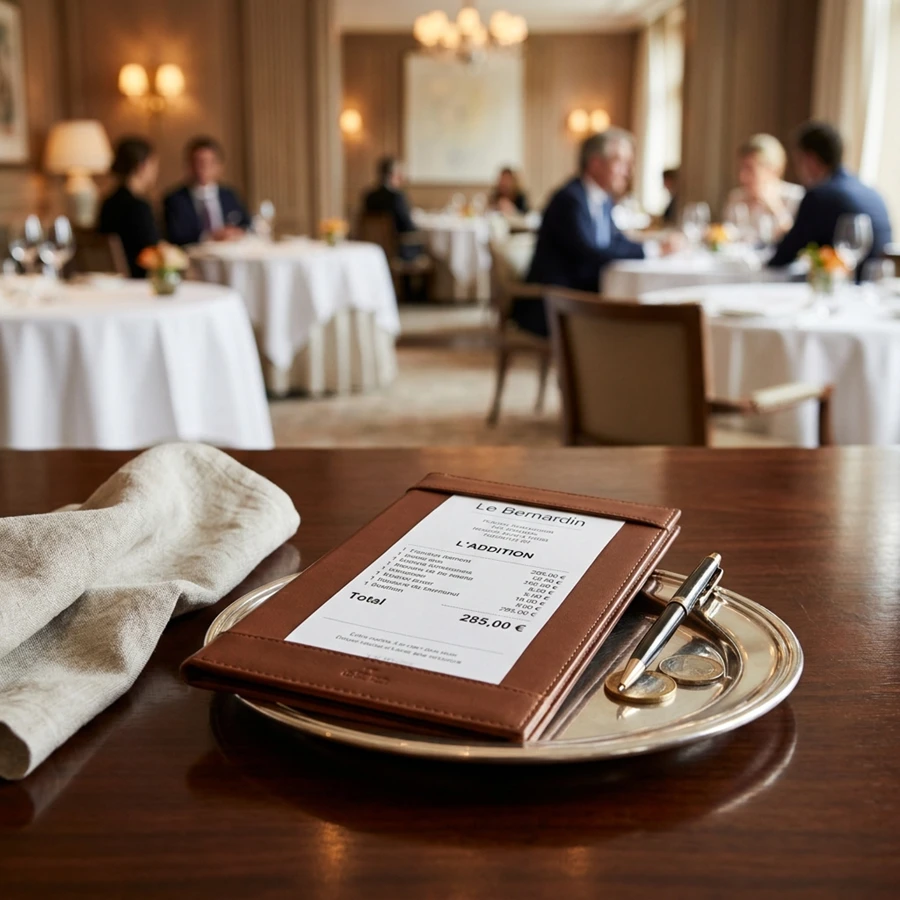
- The time to receive the bill after requesting it
- The clarity of the invoice: do the prices match the menu? Are any promotions correctly applied?
- The attitude at the exit: is the guest accompanied to the door? Are they thanked for their visit? Are they invited to return?
The psychology of guest experience teaches us that the final moments of an interaction carry disproportionate weight in the overall memory. An excellent meal can leave a mixed impression if the bill takes twenty minutes to arrive and no one says goodbye.
This is precisely the kind of detail that a mystery visit captures — and that online reviews never articulate with this level of precision.
What the mystery visit reveals that online reviews don’t
Online reviews have their usefulness. They reflect guest perception and influence purchasing decisions. But they have structural limitations that the mystery visit overcomes.
The limitations of online reviews:
- They are unstructured: each guest evaluates what matters to them personally, with no common framework
- They are polarised: highly satisfied or highly dissatisfied guests express themselves far more than ordinary guests
- They can be fake or manipulated: studies estimate that a significant proportion of online reviews do not reflect a real experience
- They allow for no precise action plan: “the service was slow” does not say at what point, why, or how to remedy it
What the mystery visit additionally provides:
- Objective criteria evaluated in the same way on every assignment
- A neutral perspective, uninfluenced by mood or personal expectations
- A detailed, actionable report for management: strengths, areas requiring attention, concrete recommendations
- The ability to measure progress over time through recurring assignments
In practice, following a mystery visit, a restaurateur can identify priority training areas for their team, adjust service procedures, or reinforce existing strengths to consolidate them. It is a management tool, not a judgement.
How does a restaurant mystery visit actually work?
The principle is simple in form, rigorous in execution.
How an assignment unfolds:
- The reservation: the auditor books like any ordinary guest, by phone or online. The evaluation begins from this first contact.
- The meal: the auditor behaves in every respect like a regular diner. They observe, memorise, and discreetly note according to an evaluation grid defined in advance.
- Departure: the auditor pays the bill, takes their leave, and completes their report in the hours that follow.
- The report: a detailed document is submitted to the establishment, covering all evaluated criteria, with precise observations and recommendations.
The evaluation grid can cover several hundred criteria, organised by stage of the guest journey. Each criterion is either binary (met / not met) or graduated (on a qualitative scale), depending on its nature.
Recurring assignments make it possible to track progress over time: a first audit establishes a baseline, while subsequent ones measure the impact of actions taken.
Girault-Pasqué, specialised in mystery audits for the hospitality and restaurant sector since 2011, has supported more than 250 establishments across more than 30 countries. Each assignment is built on a rigorous methodology, developed with industry professionals, to ensure results are both precise and directly actionable.
FAQ — Restaurant mystery visits
A restaurant mystery visit is an anonymous evaluation assignment carried out by a trained auditor who behaves like an ordinary guest. They assess the entire guest journey — from reservation to departure — according to a predefined grid of objective criteria, then produce a detailed report submitted to the establishment.
The criteria cover the entire guest journey: reservation process, welcome upon arrival, quality of floor service, staff product knowledge, service timing, dish presentation and temperature, cleanliness of all spaces (dining room, toilets, terrace), handling of unexpected situations, clarity of the bill and quality of the departure. A grid can encompass several hundred criteria.
The auditor books a table like any regular guest, dines while discreetly observing the defined criteria, pays the bill and leaves. They then complete their report in the hours that follow. The establishment receives a detailed document containing observations and recommendations.
Not subjectively. A mystery visit is not a food guide. What is evaluated consists of objective criteria: consistency between the menu and the dish served, presentation, temperature, perceptible freshness and perceived value for money. These criteria are reproducible and comparable from one assignment to the next.
A customer review is subjective, unstructured and often polarised (either very positive or very negative). It reflects the personal perception of one guest at a given moment. A mystery visit is based on objective criteria, a neutral perspective and a report that management can act upon. It makes it possible to identify precise areas for improvement and to measure progress over time.
There is no universal frequency. A first audit establishes a baseline. Recurring assignments (quarterly or twice-yearly, for example) then make it possible to measure the impact of actions taken and to maintain a consistent standard of excellence. The ideal frequency depends on the establishment’s objectives and the dynamics of its teams.
Useful sources
- UMIH — Union des Métiers et des Industries de l’Hôtellerie: the leading professional organisation for the hospitality and restaurant sector in France
- GNI — Groupement National des Indépendants Hôtellerie et Restauration: the trade union for independent and heritage establishments
- AKTO — Observatoire des métiers de la restauration: studies on guest expectations and skills in the restaurant industry
- Atout France — Qualité Tourisme: the official quality benchmark for tourism establishments in France
- Girault-Pasqué — Hospitality and restaurant audits and mystery visits: restaurant audit expertise since 2011