

The essentials in 30 seconds
In a palace or a five-star hotel, a luxury hotel mystery guest mission does not measure compliance with a checklist. It maps the emotional experience that is actually lived: the feeling of being recognised upon arrival, the surprise of an unsolicited attention, the security provided by staff who anticipate. It is these emotions (invisible in online reviews) that the mystery visit report reveals to management. And behind every emotion, there is an employee: their relational intelligence, their ability to listen, their mastery of the codes of luxury.
What sets a luxury evaluation apart from a standard audit — the assessment criteria of the high-end segment!
In a standard hotel, the audit checks compliance: did the check-in take less than three minutes? Was the room ready on time? These questions have their usefulness. But in the prestige hospitality mystery guest, they are not enough – and they are not even the main point.
In luxury, compliance is the minimum, not the objective.
What we really measure is something else: did the employee recognise the guest? Did they memorise their preferences without being reminded of them? Did they create a moment – however fleeting – that will stay with the guest? And above all: what did the guest feel at each stage?
The luxury hotel evaluation rests on four pillars that you will not find in a standard framework:
- Personalisation: is each interaction tailored to this specific guest, or recited identically for everyone? Personalisation generates the feeling of being recognised – a rare, and powerful, emotion.
- Anticipation: are needs guessed before they are expressed? When an employee anticipates correctly, the guest feels a deep sense of security: they are in good hands.
- Discretion: is the service so seamless that it feels natural, without ever weighing on the guest? Discretion is the art of producing an emotion without the guest seeing the work behind it.
- Memorable emotion: does the stay leave a lasting mark, beyond material comfort? A moment of sincere surprise, an unexpected attention – that is what the guest is still talking about six months later.
These hotel evaluation criteria cannot be inventoried by ticking boxes. They must be experienced; and that is precisely why an expert trained to read them is needed.

The criteria assessed before arrival
The mission begins well before the mystery guest crosses the threshold of the establishment.
Taking the reservation – by phone, email or online form – is already a moment of truth. We observe the tone used, the speed of response, but above all: did the person ask the right questions? Did they seek to understand the occasion of the stay, the preferences, the implicit expectations? An advisor who listens actively, who rephrases, who takes notes – this is already an emotional promise made to the guest before they even arrive.
Pre-stay communication is just as revealing. An exceptional hotel does not simply confirm the reservation. It takes the initiative: offering a transfer, suggesting a table at the restaurant, anticipating a particular request. This proactive gesture creates a first positive emotion – the guest feels expected, valued. Its absence, conversely, instils a slight disappointment from the very start.
We also assess the consistency between the brand promise and what the guest perceives online: website, social media, responses to reviews. The luxury hotel audit begins there, in the digital space, before the first human contact.
Arrival and check-in: the moment of truth
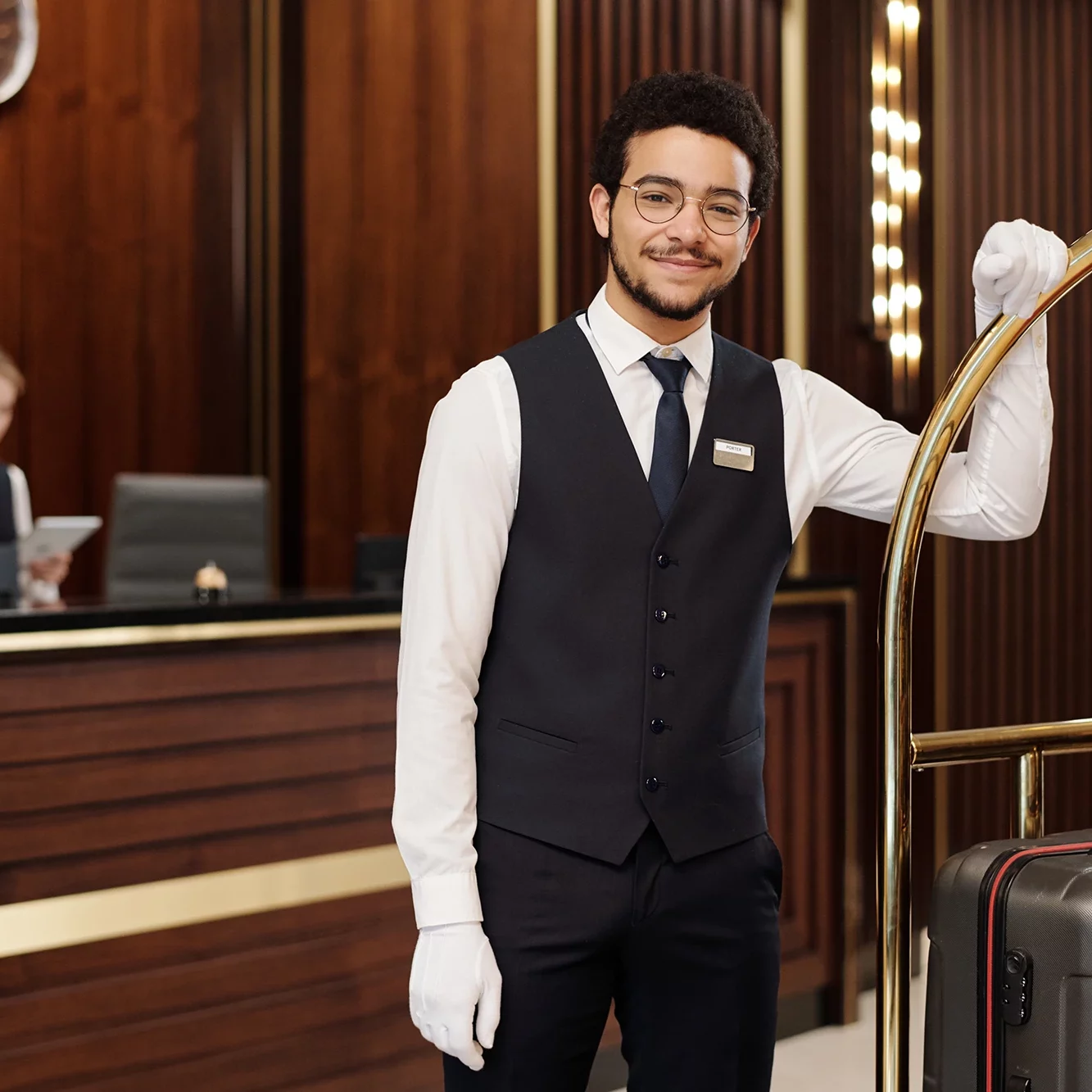
Arrival concentrates a strong emotional charge. It is the first physical contact with the establishment, and the first few seconds count disproportionately. A successful welcome immediately instils a sense of security and of being welcome. A failed welcome – even a subtle one – creates an emotional rupture from which the guest does not always recover.
As part of a luxury hotel mystery visit, we observe with precision:
- Recognition of the guest: are they greeted by name? If it is a returning guest, is there a trace of their previous stay? If it is a special occasion, has it been identified and honoured? Being called by your name on arrival is a micro-emotion – but it immediately triggers the feeling of being recognised.
- The relational intelligence of the welcome staff: do they read the situation? Do they adapt their register depending on whether the guest arrives exhausted from a long journey or relaxed for a weekend? Is the warmth sincere or recited? An employee who masters the codes of luxury knows how to calibrate their attitude without being asked.
- The room on arrival: is it consistent with what was promised? Is there an unexpected detail – a personalised attention, a small gesture – that turns entering the room into a genuine emotional surprise?
It is not the waiting time at the counter that counts. It is what the guest feels as they set down their luggage.

The stay: the moments that make the difference
A palace is not judged on a single point of contact. Excellence must be constant across the entire stay – and it is precisely there that flaws most often appear.
Room service, the restaurant, the spa: each of these spaces is assessed separately, but also in their overall coherence. An exceptional dinner followed by a sloppy room service breaks the experience – and this emotional rupture leaves a far deeper mark than the sum of the good moments. In the luxury mystery guest, we hunt down these gaps in standard with precision.
Handling the unexpected is one of the most powerful revealers. When something does not go as planned – a delay, a mistake, an unusual request – how does the team react? Is the solution delivered naturally, without the guest having to insist? An employee with genuine emotional management in the face of the unexpected does not merely solve the problem: they turn the situation into an opportunity to strengthen the guest’s trust. Is the attitude that of a professional who takes charge, or of an employee who shirks responsibility?
We also assess the ability to personalise without seeming intrusive. The guest mentioned in passing that they preferred tea to coffee? The next morning, it is tea that arrives – without them having to ask again. This kind of active listening, discreet and precise, generates a memorable emotion: the guest feels understood, not watched.
Finally, there is discretion. In luxury, the best service is the one you do not see. Knowing how to make yourself invisible when necessary, and to be present at the right moment without having been asked – this is an art that few establishments truly master. And behind this art are employees trained to read non-verbal signals, to sense the right moment, to act without imposing.
Departure and the post-stay
Check-out is often neglected. This is a mistake. It is the last memory the guest takes away – and in luxury, last impressions last. Psychologically, the end of an experience retrospectively colours the entire stay. A botched departure can erase days of excellence.
We assess administrative smoothness, of course. But above all: is there a genuine moment of emotional closure? Is the guest thanked in a personalised way, with a reference to something experienced during their stay? Does the team express a sincere invitation to return – not a recited formula, but something that shows they have remembered, listened, and will remember?
An employee who knows how to conclude a stay with the right touch – warm without being excessive, personal without being familiar – demonstrates rare relational intelligence. It is this nuance that we seek to evaluate.
Post-stay follow-up is the final part of the evaluation. Is the thank-you email generic or personalised? Have the preferences expressed during the stay been memorised for next time? This detail, often invisible, is what turns a satisfied guest into a loyal one – and a beautiful experience into a lasting emotion.
The key staff skills assessed during the mission
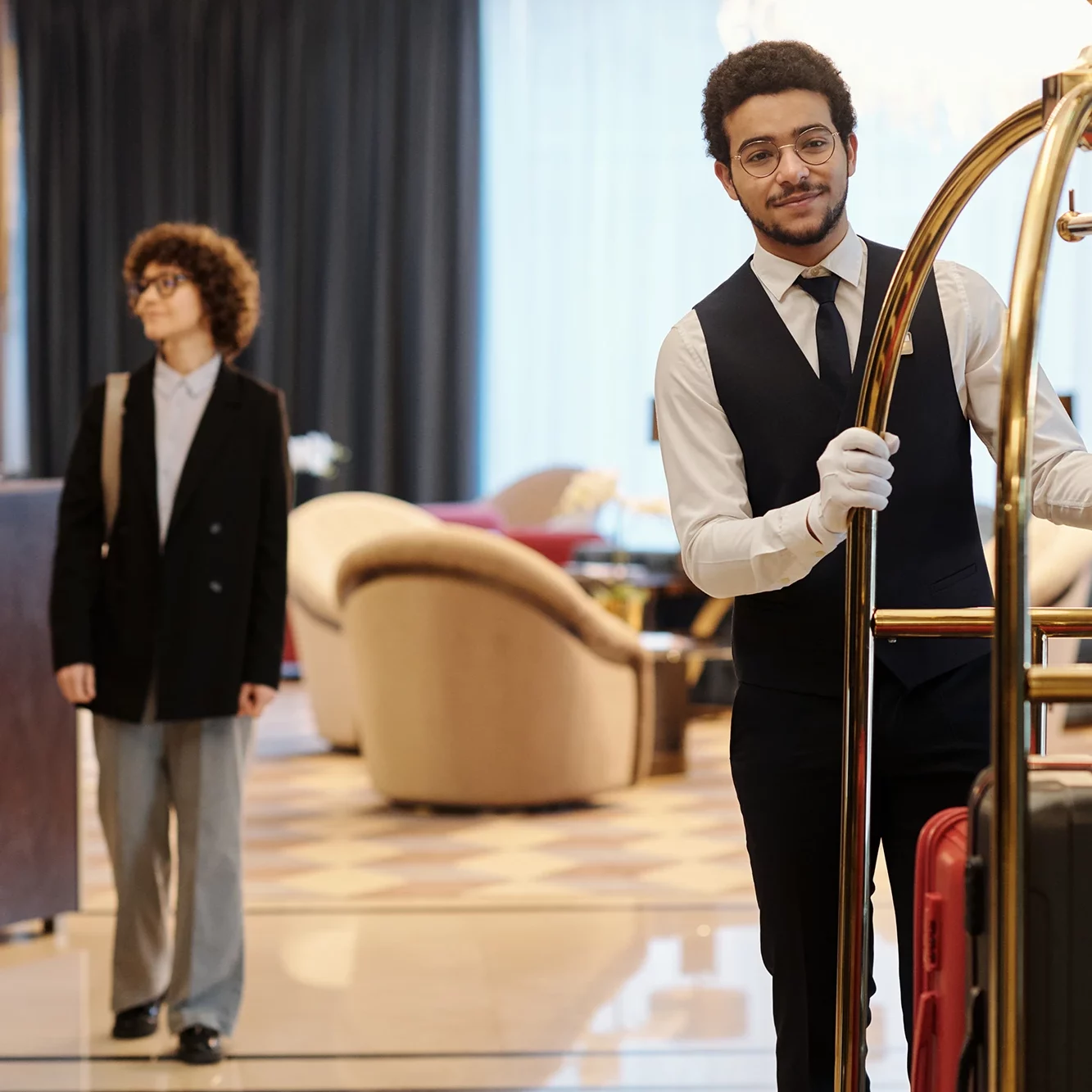
Behind every moment of excellence – or every rupture – there is an employee. One of the added values of a hospitality mystery guest mission is precisely to make visible the human skills that operational indicators do not capture.
Here is what we assess concretely in the teams:
Active listening: does the employee memorise the information given in passing? Do they rephrase to make sure they have understood correctly? Or do they carry on with their script without really hearing?
Relational intelligence: do they know how to read the situation, adapt their register, sense when the guest wants to be left alone and when they expect a presence? This skill cannot be improvised – it is trained, and it can be detected.
Mastery of the codes of luxury: posture, vocabulary, pace, gestures. The codes of high-end service are precise. An employee who masters them creates a coherence that reassures and flatters the guest. An employee who ignores them – even with the best of intentions – generates a diffuse discomfort.
Emotional management in the face of the unexpected: when something goes wrong, do they stay calm, solution-oriented, without passing their stress on to the guest? The ability to absorb pressure without letting it weigh on the experience is one of the rarest and most precious skills.
Personalisation without intrusion: knowing how to use the information collected to pleasantly surprise the guest – without ever giving them the impression of being watched or filed away. It is a subtle balance, and it is exactly what we measure.
What the mystery visit report reveals to management
A good hospitality mystery guest report is not a list of faults. It is a map of the experience as it was lived, from the first digital contact to the last exchange at departure.
What online reviews never capture:
- The micro-moments of friction that do not reach the threshold of a complaint but erode satisfaction
- The organisational blind spots: transitions between services, shift changes, the “no man’s land” moments where no one takes charge
- The gap between the brand promise and the actual execution, as a demanding guest perceives it
For management, the report is a steering tool. It makes it possible to train teams on specific situations – not generalities – and to identify the employees who already embody excellence, as well as those who need support.
It also makes it possible to steer quality over time, by comparing the results of one mission with another, measuring progress, and anticipating points of vigilance before they become visible to guests.

FAQ
In a standard hotel, the evaluation focuses on compliance with operational standards. In a palace or a five-star hotel, we measure relational excellence: personalisation, anticipation, discretion, emotion. The criteria are not the same, and neither are the evaluators; you need profiles capable of blending into the target clientele and reading subtle signals.
Most high-end establishments schedule two to four missions per year, with different mystery guest profiles each time (couple, solo traveller, business guest, special occasion). Regularity is key: a one-off audit gives a snapshot, regular audits give a film.
In luxury, the evaluators are selected and trained to match exactly the profile of the establishment’s usual clientele. They are accustomed to frequenting this type of hotel. Detection is therefore highly unlikely – and if it does happen, it is in itself useful information about the vigilance (or suspicion) of the teams.
That is not the objective, and it is not good practice. The report should serve to train, to support, to recognise good practices as much as to identify areas for improvement. Used as a punitive tool, it generates anxiety and harms the quality of service.
A guest review is subjective, unstructured and often polarised (very positive or very negative). It reflects the personal perception of a guest at a given moment. The mystery visit relies on objective criteria, a neutral perspective and a report that management can act on. It makes it possible to identify precise areas for improvement and to measure progress over time.